To read Sally Minogue's appreciation of the works of Virginia Woolf, click here
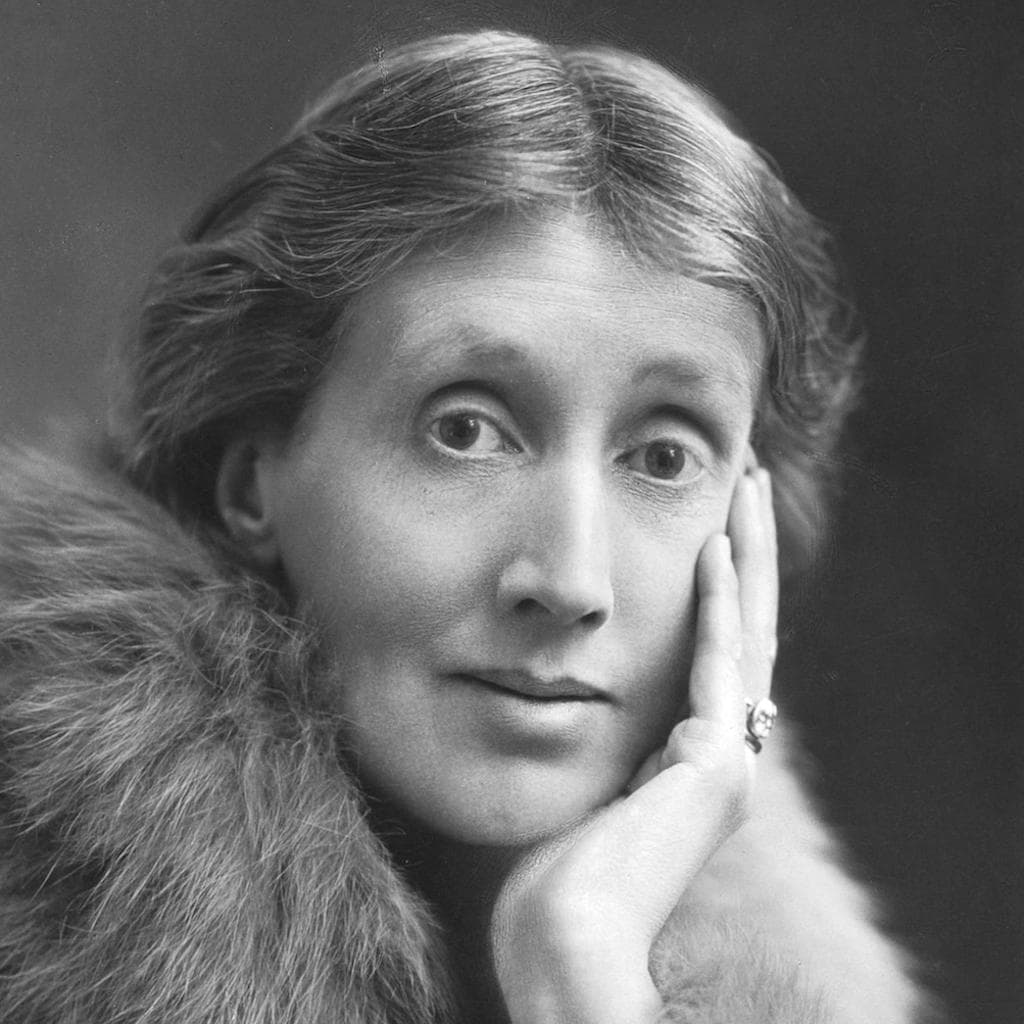
Virginia Woolf (neè Stephen) was born in London on the 25th January 1882. Born to Sir Leslie Stephen and Julia Prinsep Stephen, she was educated their home in Kensington where she lived with her siblings and step-siblings from her parents’ previous marriages (both were widowed).
Virginia suffered from mental illness and depression from very early on in life. Her mother died from influenza when Virginia was thirteen, and the subsequent death of her half sister two years later led to her first breakdown. She was briefly institutionalised in 1904 after the death of her father, and her drastic mood swings continued throughout her life until her death in 1941. Modern diagnostic techniques have led to Virginia being posthumously diagnosed as having bi-polar disorder. After her second breakdown, Virginia bought a house in Bloomsbury with two of her siblings where they met the artists and scholars who became known as the Bloomsbury Group.
Virginia married Leonard Woolf in 1912, and although biographers have concluded that her sexuality was primarily directed towards women, they remained married until her death. Over the course of her lifetime Virginia had a number of relationships with women including Vita Sackville-West, for whom she wrote Orlando.
Virginia Woolf began writing professionally in 1905, her first work being a journalistic piece for the Times Literary Supplement about the home of the Brontë family (Haworth). Her first novel, The Voyage Out was published in 1915, followed by Night and Day (1919), Jacob's Room (1922), Mrs Dalloway (1925), To The Lighthouse (1927), Orlando (1928), The Waves (1931) and The Years (1937) were to follow. In addition to her novels, she wrote short-story collections, and many non-fiction books, including the influential extended essay, A Room of One's Own (1929).
After completing the first manuscript of Between The Acts, her last novel, published posthumously, she once again fell victim to depression and on 28th March 1941 she drowned herself in the River Ouse. Her remains are buried under a tree in the garden of her home in Rodmell, Sussex.
Virginia Woolf has been recognised as one of the greatest novelists of the 20th century and one of the first Modernist writers. Her ‘stream-of-consciousness’ style, in which the character’s thought processes are conveyed, has led to her being considered as one of the greatest innovators in the English language.